If you have ever experienced perioral dermatitis (PD), you know how frustrating, confusing and overwhelming it can feel.
I know this because I have experienced it myself.
I’m Kiri, the founder of AMPERNA®, and my own skin journey is the reason this brand exists.
After experiencing severe acne in my late twenties, I later developed perioral dermatitis during the early years of building AMPERNA®. Like many people with sensitive skin, I found myself searching for answers, trying different products and wondering why my skin seemed to become more reactive.
What I eventually learned was that my skin did not need more products - it needed less.
By simplifying my skincare routine, focusing on my skin barrier and supporting my skin’s natural microbiome, I began to understand that healthy-looking skin is about working with your skin, not fighting against it.
This experience became the foundation behind AMPERNA® and our approach to microbiome-friendly skincare.
In this article, I’ll share what I learned about perioral dermatitis, common triggers, skincare mistakes to avoid, and how to create a simple routine that supports sensitive, reactive skin.

But first, let’s start from the beginning.
Your Skin Microbiome
Just like our gut, our skin has its own microbiome. A healthy, diverse but balanced skin microbiome helps maintain a stable skin barrier function, protecting it against pathogens and environmental stressors.
Balancing the good bacterial and fungal communities on our skin is crucial for the overall health of our skin. When there is an imbalance you may be welcoming unwanted side effects that cause skin inflammation, irritation, dryness, redness, and itchy skin.

The principles of caring for your skin barrier function include:
- Hygiene and personal care routines - Getting the right balance of general hygiene verses over-use/excessive use of beauty and personal care products is a key factor that can modify the skin microbiome.
- Maintaining a healthy skin pH - Our skin has a naturally acidic skin pH at 4.1–5.8 and this should be considered when thinking about skin hygiene and personal care practices.
- Gut health - The gut has a direct influence on the skin microbiome, via an intimate relationship known as the gut–skin axis. The gut and its own microbiome is linked to skin health and homeostasis in numerous studies.
What Is Perioral Dermatitis?
Perioral dermatitis is a common inflammatory skin condition that typically appears around the mouth, nose and sometimes the eyes.
The name comes from:
- Peri = around
- Oral = mouth
- Dermatitis = inflammation of the skin
Perioral dermatitis can look similar to acne, eczema or an allergic reaction, which is why many people spend months trying different products before understanding what their skin actually needs.
Common signs of perioral dermatitis include:
- Small red or skin-coloured bumps
- Redness around the mouth
- Dry or flaky patches
- Increased sensitivity
- Burning or stinging sensations
- Skin that suddenly reacts to products it previously tolerated
Unlike traditional acne, perioral dermatitis typically does not involve blackheads.
What Causes Perioral Dermatitis
The exact cause of Perioral Dermatitis is not fully understood, but several factors may contribute to flare-ups.
Everyone’s skin is different, and triggers can vary from person to person.
Common triggers for PD may include:
- Allergies (topical/contact)
- Make-up
- Topical steroids such as hydrocortisone
- Cosmetic procedures such as microdermabrasion
- Environmental exposure
- Misusing chemical and physical exfoliators
- Sodium lauryl/laureth sulphate in hair care, laundry detergent, and toothpaste
- Fluoride in toothpaste
- Topical application of high percentages of essential oils
- Heavy creams and facial oils
- Hormonal fluctuations
- Stress
- Oral antibiotics

1. Using Too Many Skincare Products
One of the biggest skincare mistakes I see is doing too much.
When your skin becomes irritated, it can be tempting to add more products:
- Another serum
- A stronger exfoliant
- More active ingredients
- More “treatment” products
However, sensitive skin often needs the opposite approach.
Using too many products or layering multiple active ingredients may overwhelm your skin barrier.
Ingredients that may feel too intense when your skin is compromised can include:
- Retinol
- Strong exfoliating acids
- Physical scrubs
- Harsh acne treatments
- Fragranced products
Sometimes the best thing you can do for your skin is simplify.
2. Topical Steroids
Topical corticosteroids are commonly used for certain skin concerns.
However, using steroid creams on facial skin without medical guidance may contribute to perioral dermatitis in some people.
If you are concerned about your skin or have been using topical steroids, it is always best to speak with a healthcare professional for personalised advice.
3. Toothpaste and Oral Care Products
For some people, products used around the mouth may contribute to irritation.
Potential triggers may include:
- Fluoridated toothpaste
- Strong flavouring agents
- Certain toothpaste ingredients
If you experience recurring irritation around your mouth, it may be worth reviewing all products that come into contact with this area.
4. Stress and Hormonal Changes
Stress can have a significant impact on your skin.
During stressful periods, many people notice:
- Increased sensitivity
- More redness
- Skin feeling reactive
- Existing skin concerns becoming more noticeable
Hormonal changes may also influence how your skin behaves.
This is why supporting your overall wellbeing alongside your skincare routine is important.
Perioral Dermatitis vs Acne: What Is The Difference?
Because perioral dermatitis can look similar to acne, it is often mistaken for breakouts.
However, there are some key differences between the two.
Perioral dermatitis typically appears as small red or skin-coloured bumps, often around the mouth, nose or eyes. The skin may also feel dry, irritated, sensitive, or uncomfortable. Unlike acne, perioral dermatitis usually does not involve blackheads.
Acne, on the other hand, is more commonly associated with pimples, clogged pores, blackheads and whiteheads. It can appear in areas such as the face, chest and back, and is often linked with increased oil production.
Understanding the difference between perioral dermatitis and acne is important because acne-focused products are often designed to target oiliness, exfoliation and clogged pores. These types of products may sometimes feel too harsh for skin that is already sensitive, reactive or experiencing irritation.
LET’S BUST A MYTH:
Q: Is Perioral Dermatitis linked to demodex mites?
A: No, not all cases of PD are linked to demodex mites. In fact, perioral dermatitis has only been linked to an over-abundance of mites in topical steroid/PD cases.

The “Less Is More” Approach To Perioral Dermatitis
When your skin barrier is compromised, simplifying your routine can be one of the most helpful steps.
Instead of:
❌ Multiple serums
❌ Daily exfoliation
❌ Constantly changing products
❌ Aggressive acne treatments
Try:
✅ Gentle cleansing
✅ Barrier-supporting hydration
✅ Fewer products
✅ Consistency
Your skin barrier plays an important role in helping protect your skin from external stressors and maintaining hydration.
When your barrier is disrupted, your skin may become more reactive and sensitive.
What is the Best Way to Help Perioral Dermatitis?
STOP EVERYTHING!
Literally stop using everything you normally would on your skin.
Why?
Because your skin barrier is compromised, and the angry red flaring is the way your skin is trying to indicate to you that it needs time to repair and breathe.
Here is what I suggest you do to help your skin while it is red:
- Stop wearing makeup
- Use water-only to cleanse your skin during the flared stage
- Stop using exfoliating or active products
- Avoid topical sulfur
- Stop using topical steroid creams
- Audit your personal care products
- Switch over your toothpaste to a perioral dermatitis friendly alternative.
- Use AMPERNA®'s flare safe products which include Skincare, Bodycare and Haircare
How To Support Perioral Dermatitis-Prone Skin
Stop Over-Exfoliating
Exfoliation can be beneficial for some skin types, but when your skin is irritated, it may be too much.
Consider avoiding:
- Physical scrubs
- Strong exfoliating acids
- Using too many active ingredients at once
Instead, focus on calming and supporting your skin.
Support Your Skin Microbiome
Your skin is home to millions of microorganisms that make up your skin microbiome.
This ecosystem plays an important role in maintaining balanced, healthy-looking skin.
When your skin microbiome is disrupted, your skin may become more sensitive and reactive.
This is why AMPERNA® focuses on microbiome-friendly skincare using prebiotic, probiotic and postbiotic ingredients.
Our formulations are designed to support your skin’s natural ecosystem while helping maintain a healthy-looking complexion.
Keep Your Routine Gentle
A simple skincare routine may include:
Step 1: Cleanse with a Cleanser or cool water only.
Ultra Gentle Soothing Cleanser [BALANCE]
A gentle cleanser designed to remove impurities while maintaining skin comfort.
Step 2: Support
Pro+ DS Soothing Serum [RESCUE]
A lightweight serum formulated with AMPERNA®’s postbiotic complex to support balanced, healthy-looking skin.
Step 3: Moisturise
Lightweight Soothing+ Emulsion [HYDRATE]
A lightweight moisturiser designed to support hydration and skin barrier function.
Step 4: Refresh
Pro+ SOS Daily Facial Spray [SUPACALM]
A refreshing mist designed to support skin comfort throughout the day. This can also be used after cleansing.
Don't forget a flare safe SPF
Pro+ Bio Soothing Day Mineral CC SPF15 [HYDRAPROTECT]
Don’t Forget Your Bodycare and Haircare Routine
When you are dealing with perioral dermatitis or sensitive, reactive skin, it is important to remember that your entire personal care routine matters.
Your face is not the only area of skin exposed to cleansers, shampoos, conditioners, fragrances and other ingredients every day.
Products that come into contact with your:
- Hair
- Scalp
- Neck
- Chest
- Body
- Hands
can all play a role in supporting your skin’s overall comfort and balance.
This is why I believe that everything in your personal care regime should be flare-safe.
A gentle facial skincare routine can be easily undermined by using harsh body washes, heavily fragranced products or shampoos that may leave irritating residues on your skin.
At AMPERNA®, we extended our microbiome-focused approach beyond facial skincare to create BODY CARE and HAIRCARE ranges designed for sensitive skin and scalps.
Support Your Skin From Head To Toe
Gentle Bodycare For Sensitive Skin
The AMPERNA® BODY CARE range was created to help you care for your skin beyond your face.
The Hydrating Gentle Wash with Ceramides [CERALACTIC] is a fragrance-free, soap-free body cleanser designed to gently cleanse while helping maintain skin comfort. It contains ingredients including ceramides, colloidal oatmeal and AMPERNA®’s prebiotic and postbiotic complex.
Follow with the Hydrating Gentle Lotion with Ceramides [HYDRALACTIC], a lightweight, fast-absorbing body moisturiser formulated to support hydrated, soft and comfortable-looking skin without feeling heavy.
Don’t Forget Your Scalp
Your scalp is skin too.
Just like the skin on your face, your scalp has its own microbiome and barrier that benefit from gentle, balanced care.
The AMPERNA® Haircare Duo combines:
Cleanse & Rebalance Dermal Care Shampoo [DERMACLEANSE]
and
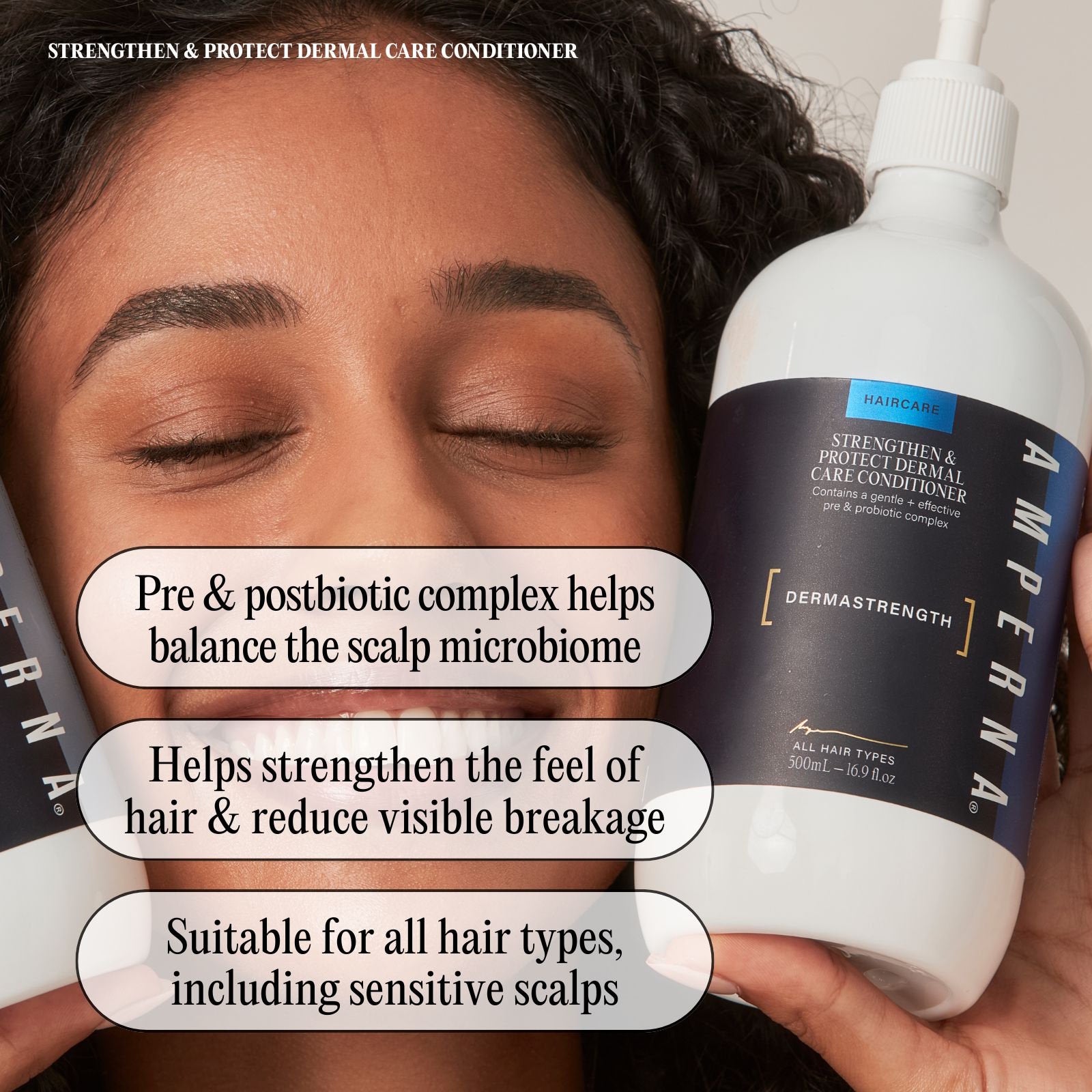
Strengthen & Protect Dermal Care Conditioner [DERMASTRENGTH]
to gently cleanse, hydrate and support scalp balance while helping hair feel soft, smooth and manageable. The formulas feature AMPERNA®’s prebiotic and postbiotic complex to support a healthy scalp environment.
Your Flare-Safe Routine Should Extend Beyond Your Face
When your skin is feeling sensitive, reactive or unpredictable, think about your whole routine.
Ask yourself:
✔ Is my shampoo gentle enough?
✔ Are my body products supporting my skin barrier?
✔ Am I introducing unnecessary fragrance or harsh ingredients?
✔ Are the products touching my face and body working together?
Your skin is connected, and creating a consistent, gentle personal care routine can help support healthier-looking skin from head to toe.
At AMPERNA®, our philosophy has always been simple:
Support your skin. Respect your microbiome. Keep it gentle.
LET’S BUST A MYTH:
Q: Can I use tea tree oil and sulphur to treat perioral dermatitis?
A: NO. Sulphur together with tea tree oil are too harsh for the skin biome. In isolation they can be ok - but the thing is that many of the formulas I see people creating are not formulated with biome supporting ingredients as well.
Sulphur is stripping. Tea tree oil needs to be diluted as high percentages of essential oils are also stripping to the skin. These are strong topicals which you should not use on a compromised barrier.
Sometimes people use Tea tree oil for treating acne because of its anti-inflammatory and antimicrobial properties. However, it may cause further skin irritation, itching, burning, and swelling for people suffering from perioral dermatitis.

Let's Explore Ingredients a Little Bit Further
Natural ingredients aren’t always better for you, and man-made ingredients are not always bad. There is a lot of scare marketing and misinformation surrounding ingredients. You need to look at the scientific data and cases for everything. In terms of skincare formulas you also need to look at how ingredients are put into products and whether the products have been formulated by a cosmetic chemist and manufactured to ISO standards. Australian skincare manufacturing has one of the best in the world.
The importation, manufacture, and use of chemicals - including those used in cosmetics - are regulated by the Australian Government’s National Industrial Chemicals Notification and Assessment Scheme (NICNAS). NICNAS works to ensure that chemicals used in consumer products do not cause significant harm to users or to the environment.
Ingredients at the top of the ingredients list are the ones of the highest concentrations and the ones at the bottom of the list are least concentration. Ingredients can be naturally occurring or artificial. The doses of potentially dangerous chemicals found in cosmetics are considered too small to pose a risk to human health.
In the case of cosmetics, every ingredient contained within the product must be scientifically assessed and approved by NICNAS before being manufactured or imported into Australia and before they can be used in consumer products.
I manufacture and hire a cosmetic chemist in Australia and had to comply with all the above safety standards for AMPERNA® products.
Ingredients To Be Mindful Of During A Flare-Up
Everyone’s skin is different, but many people with sensitive skin choose to temporarily avoid:
- Retinoids
- Strong acids
- Physical exfoliants
- Fragrance
- Essential oils
- Heavy product layering
The goal is not necessarily to avoid these ingredients forever - it is about understanding what your skin needs during different stages.
Once your skin feels comfortable and balanced, you can slowly introduce targeted ingredients back into your routine. In fact, AMPERNA® has a great range of actives that you can move onto once we have helped your flare up.
Why AMPERNA® Was Created
AMPERNA® was created from my own experience with sensitive, reactive skin.
After struggling with acne and later perioral dermatitis, I realised many skincare approaches focused on adding more products rather than supporting the skin’s natural function.
I wanted to create skincare that worked with sensitive skin by focusing on:
- Skin barrier support
- Microbiome balance
- Gentle yet effective formulations
That philosophy remains at the heart of AMPERNA® today.
Final thoughts:
Perioral dermatitis can feel overwhelming, especially when your skin suddenly becomes sensitive and unpredictable.
The key is understanding that irritated skin often needs patience, simplicity and support.
By reducing potential triggers, simplifying your skincare routine and supporting your skin barrier and microbiome, you can help your skin feel calmer and more balanced.
Your skin is unique.
Healthy-looking skin starts with understanding your skin—not fighting against it.
And please, do not get swayed by people on the internet or social media forums saying they have treated their perioral dermatitis with skin-stripping products… It is more about gently caring for your Skin Microbiome, not destroying it.
More Reading:
• Damaged Skin Barrier? Here's What to Do
• Postbiotics in Skincare
• Finding Your Skin Trigger Versus Masking the Symptoms
• So You Have Perioral Dermatitis; Now What?